
As consumer demand shifts toward natural, plant-based, and clean-label ingredients, traditional botanicals are being rediscovered and adapted for modern food production.
Among these, pandan has emerged as a highly versatile ingredient. However, many product developers still face practical challenges:
Inconsistent aroma between batches
Weak or unstable natural color
Difficulty scaling from fresh leaves to industrial use
So the key question is:
Is your pandan ingredient truly suitable for large-scale formulation—or just a traditional raw material?
What Is Pandan Powder and Why Is It Gaining Industrial Relevance?

Pandan Powder is produced from the leaves of Pandanus amaryllifolius through a series of processes including washing, drying, and fine grinding. These steps are designed to preserve the plant’s natural aroma compounds and color pigments while converting it into a stable, easy-to-handle powder form.
Compared with fresh pandan leaves, the powdered format offers significant advantages in terms of storage, transportation, and standardization. Fresh leaves are highly perishable and difficult to dose accurately, whereas pandan powder allows for more precise and consistent use in food production.
From an industrial perspective, pandan powder bridges the gap between traditional culinary use and modern manufacturing. It transforms a regionally used ingredient into a scalable, globally applicable raw material suitable for diverse product systems.
Why Do Many Manufacturers Struggle to Replicate Authentic Pandan Flavor?
One of the most common challenges is achieving a consistent and authentic pandan aroma in finished products.
The characteristic fragrance of pandan comes from a complex combination of volatile compounds. If the raw material quality is inconsistent or the drying process is not well controlled, these compounds can degrade or vary significantly between batches.
Additionally, some lower-quality powders may have diluted aroma intensity, requiring higher usage levels, which can impact formulation balance. This makes raw material selection and processing technology critical factors in maintaining authentic flavor performance.

What Makes Pandan Powder’s Flavor Profile Unique and Valuable?

Pandan powder is widely recognized for its distinctive aroma, often described as a natural blend of vanilla, coconut, and nutty notes, combined with a subtle fresh herbal character.
Unlike synthetic flavorings, this profile is softer and more layered, making it easier to integrate into a variety of food systems without overpowering other ingredients. This characteristic is particularly valuable in products that aim for a natural and premium sensory experience.
Another important advantage is its thermal stability. The aroma of pandan powder remains relatively stable during heating and baking, allowing it to perform consistently in applications such as baked goods, desserts, and beverages.
Why Does Pandan Powder Appeal to Clean-Label Product Development?
In addition to flavor, pandan powder also provides a natural green color, which is increasingly valued in clean-label formulations.
Consumers are becoming more cautious about artificial colorants and flavorings, creating strong demand for plant-based alternatives. Pandan powder offers a dual function—serving as both a flavoring agent and a natural coloring ingredient.
This dual functionality not only simplifies formulations but also enhances product positioning, especially in markets where “natural” and “plant-derived” claims play a key role in purchasing decisions.
Why Is It Difficult to Maintain Consistent Color and Appearance?

Despite its advantages, maintaining consistent color in pandan powder can be challenging.
The green pigment in pandan leaves is sensitive to factors such as drying temperature, light exposure, and storage conditions. Improper processing may result in dull or uneven coloration, which can affect the visual quality of the final product.
In addition, oxidation during storage can gradually reduce color intensity. This is why high-quality pandan powder requires carefully controlled processing and packaging to ensure stability over time.
Where Can Pandan Powder Be Applied in Modern Food Products?

Pandan powder is highly versatile and can be used across a wide range of applications.
In traditional contexts, it is commonly used in:
- Desserts
- Rice-based dishes
- Beverages
In modern food systems, it is increasingly applied in:
- Baked goods
- Functional beverages
- Ice cream and dairy products
- Plant-based foods
Its ability to provide both flavor and color makes it particularly attractive for innovative product development and differentiation.
How Can You Identify a High-Quality Pandan Powder?
Selecting the right pandan powder requires careful evaluation beyond basic appearance.
Key factors to consider include:
- Aroma intensity and authenticity
- Color stability and uniformity
- Particle size and dispersibility
- Moisture content and shelf stability
In addition, reliable suppliers should provide consistent batch quality and clear specifications, ensuring the ingredient performs reliably in different applications.
Are You Using Pandan as an Ingredient or a Competitive Advantage?
Pandan powder is no longer just a traditional flavor—it is evolving into a functional, multi-purpose ingredient for modern food development.
However, its success in your product depends on selecting the right quality and format. Poor-quality powder may lead to inconsistent flavor and appearance, while a well-processed extract can significantly enhance both sensory experience and product positioning.
If you are facing challenges such as:
- Weak or inconsistent aroma
- Unstable natural color
- Difficulty scaling production
We can support you with:
- High-quality Pandan Powder with consistent aroma and color
- Controlled processing for better stability
- Reliable bulk supply for industrial use
- Technical support for different applications
Contact us today to get:
Free samples
Detailed specifications
Competitive bulk quotation
Turn a traditional ingredient into your next high-value product.
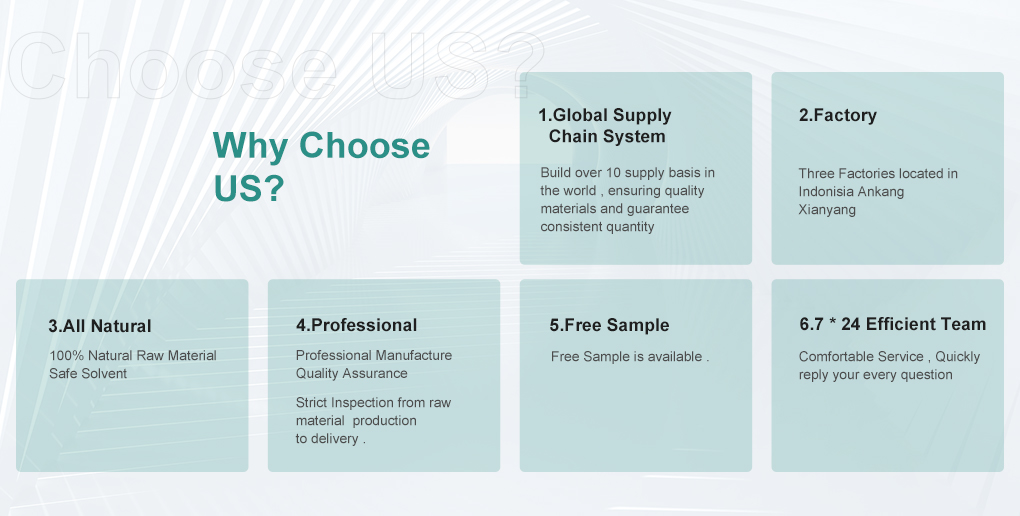
About Ruiwo:
contact us:
Address:Room 703, Ketai Building, No. 808, Cuihua South Road, Xi’an, Shaanxi, China
E-mail: info@ruiwophytochem.com
Phone: 008613484919413 0086-29-89860070
Hours: Monday-Friday: 9am to 6pm
Post time: Mar-30-2026


